
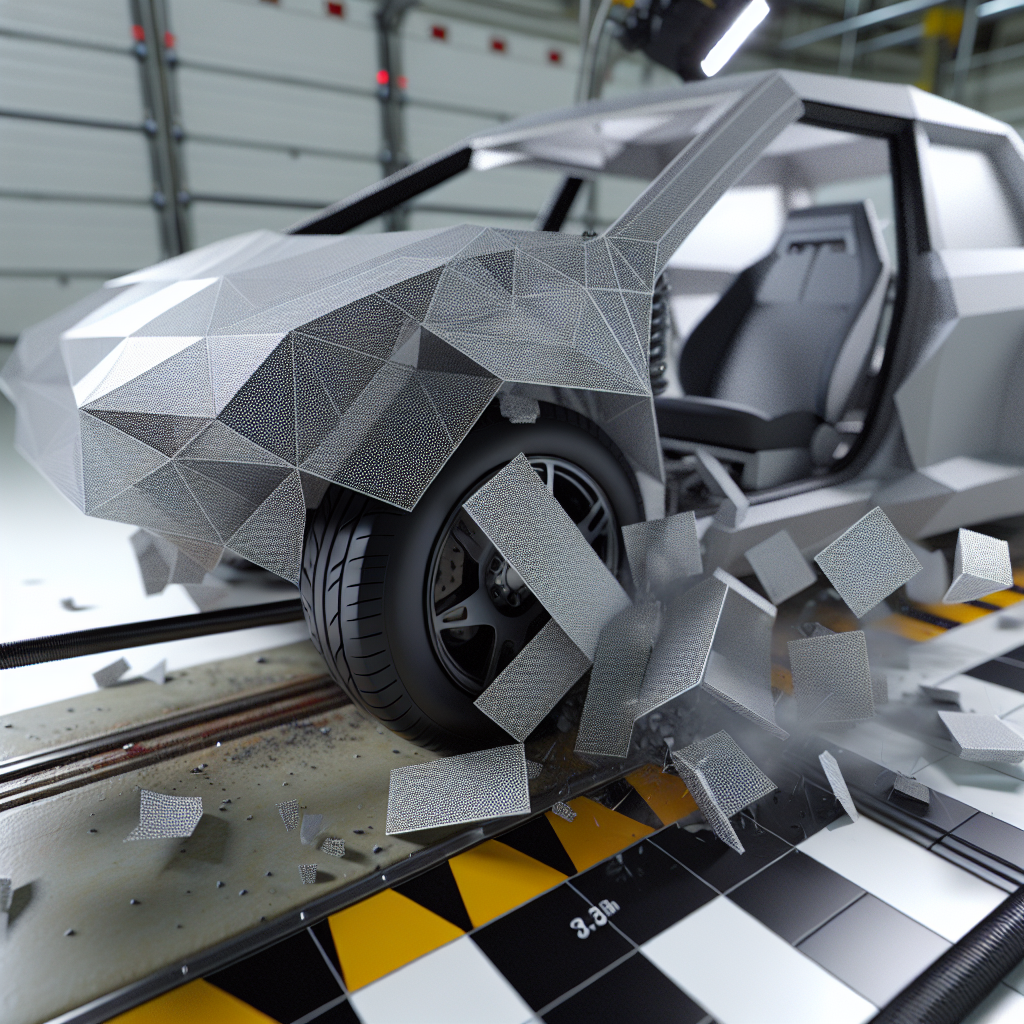
The Tesla Cybertruck has garnered significant attention not only for its futuristic design and innovative features but also for its safety performance in crash tests conducted within popular simulation environments like BeamNG.Drive. In this article, we’ll explore the details of a recent crash test of the Cybertruck in BeamNG.Drive, highlighting its safety features and performance under crash scenarios.
Realistic Crash Simulations in BeamNG.Drive: Assessing the Cybertruck’s Safety
BeamNG.Drive is renowned for its realistic physics engine, making it a favorite among automotive enthusiasts and safety testers. When simulating a crash test for the Tesla Cybertruck, the game meticulously models the vehicle’s structures, materials, and safety systems, providing an insightful look into how the electric pickup might perform in real-world accidents. The simulation includes collisions with obstacles like walls, poles, and other vehicles, allowing us to analyze the vehicle’s structural integrity, crumple zones, and safety features.
During the crash test, the Cybertruck’s robust exterior and strategic crumple zones demonstrated impressive energy absorption capabilities. The simulation also highlighted the effectiveness of Tesla’s design in protecting the passenger compartment, minimizing intrusion and potential injuries. Such virtual crash tests are invaluable, especially before physical prototypes are subjected to real-world testing, offering cost-effective insights into safety performance.
Implications for Safety and Future Testing
While BeamNG.Drive provides a detailed and realistic simulation environment, it’s important to contextualize these results within the broader scope of vehicle safety assessments. The Cybertruck’s crash test in the game underscores Tesla’s commitment to safety, emphasizing features like reinforced frames, airbags, and collision avoidance systems. However, real-world crash testing by organizations such as NHTSA and Euro NCAP will ultimately validate these virtual findings.
Furthermore, the simulation illustrates how modern electric vehicles like the Cybertruck are designed to meet or exceed traditional safety standards. The focus on high-strength steel, reinforced battery packs, and comprehensive safety systems demonstrates Tesla’s proactive approach to occupant protection. As virtual testing continues to evolve, it plays a crucial role in refining vehicle design and ensuring safer transportation options for consumers.
In conclusion, the BeamNG.Drive crash simulation of the Tesla Cybertruck provides an intriguing glimpse into its safety capabilities, showcasing advanced structural design and safety features. While virtual tests are not substitutes for real-world crash tests, they play a vital role in early safety assessments and vehicle development. As Tesla advances its safety innovations, rigorous physical testing will confirm whether the Cybertruck lives up to its virtual safety performance promises.