
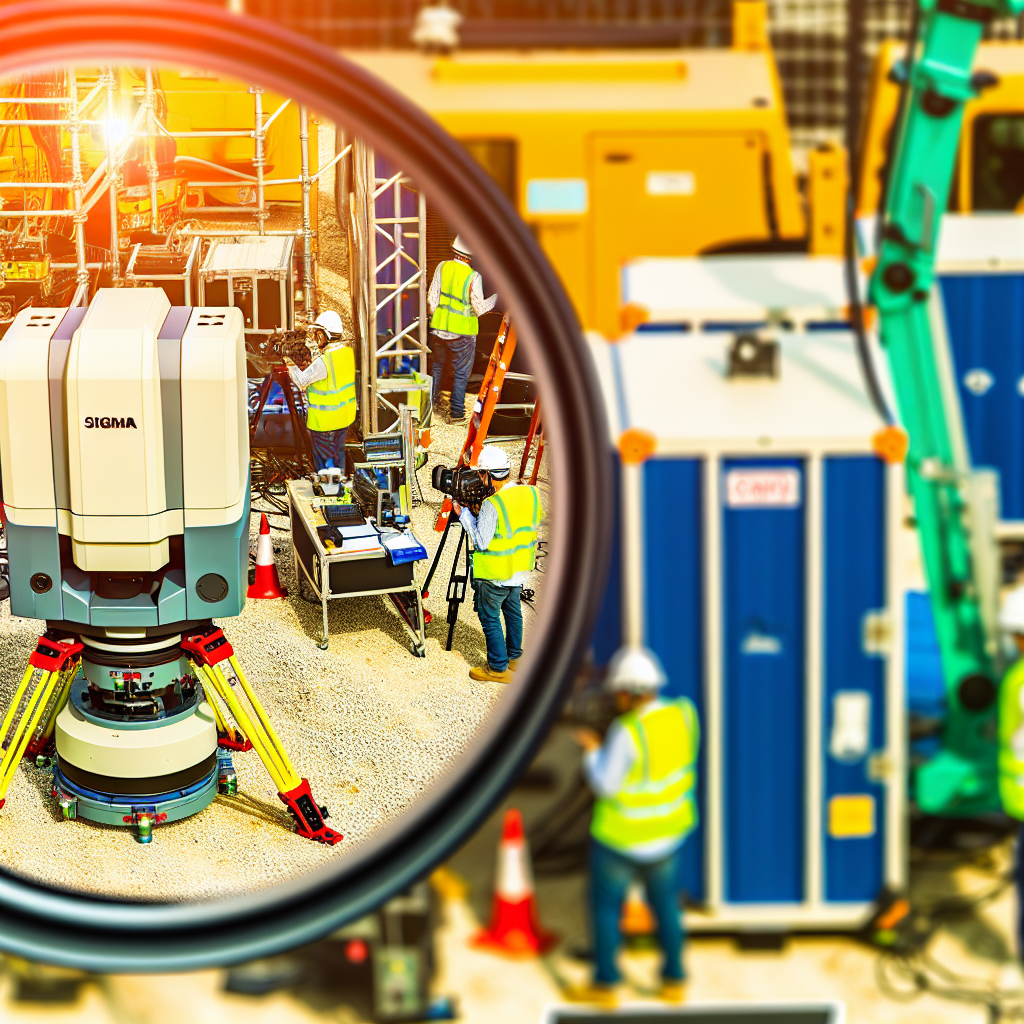
Quality Assurance in Terrestrial Laser Scanning Networks – Beyond the Crystal Ball
Ensuring the accuracy and reliability of terrestrial laser scanning (TLS) networks is crucial for achieving precise geospatial data. This article explores advanced quality assurance methodologies that transcend traditional approaches, emphasizing proactive strategies and technological innovations to predict and mitigate errors before they impact the final results.
Implementing Robust Quality Control Measures for TLS Networks
Traditional quality assurance in terrestrial laser scanning often relies on post-survey validation, such as comparison against control points or reference datasets. However, these methods can be reactive, detecting errors only after data collection, which may lead to costly rework. To move beyond the crystal ball and achieve **proactive quality assurance**, organizations are adopting comprehensive strategies that incorporate multiple layers of control throughout the scanning process.
Effective measures include:
- Pre-survey calibration: Regular calibration of scanners to ensure consistent performance.
- Environmental assessments: Monitoring environmental conditions such as temperature, humidity, and atmospheric pressure that can influence measurement accuracy.
- Equipment validation: Routine validation tests to detect drift or degradation in scanner components.
- Data consistency checks: Implementing real-time data validation techniques during scanning sessions to identify anomalies immediately.
By integrating these controls, operators can significantly reduce uncertainties, leading to higher confidence in the accuracy and repeatability of laser scans. Moreover, such systematic quality checks facilitate early detection of issues, saving time and resources in the long run.
Leveraging Technological Innovations for Predictive Quality Assurance
Advancements in technology are transforming the landscape of quality assurance in TLS networks. Rather than relying solely on reactive measures, **predictive analytics** and **machine learning algorithms** can anticipate potential measurement errors based on historical data and environmental conditions. This enables engineers to adjust scanning parameters proactively, avoiding pitfalls before they occur.
For example, integrating sensors that monitor scanner stability, ambient conditions, and positional accuracy with data analytics platforms allows for continuous quality monitoring. These systems can generate alerts when certain thresholds are exceeded, prompting immediate corrective actions. Furthermore, **cloud-based platforms** facilitate collaborative data sharing and real-time quality control across multiple teams and locations, fostering a more cohesive and efficient scanning workflow.
Additionally, adopting **automated calibration and self-diagnostic routines** enhances scanner reliability over time. Collectively, these technological tools elevate quality assurance from a reactive process to a dynamic, predictive one—empowering organizations to *see beyond the crystal ball* and ensure superior data quality from the outset.
Conclusion
Achieving high-quality terrestrial laser scanning networks requires a shift from traditional, reactive quality control to proactive, technology-driven strategies. Implementing comprehensive checks during all phases of data acquisition and leveraging predictive analytics ensures accuracy, reduces errors, and optimizes resource use. Embracing these advanced approaches allows professionals to gaze *beyond the crystal ball*, confidently delivering precise geospatial data and enhancing the overall reliability of TLS applications.