
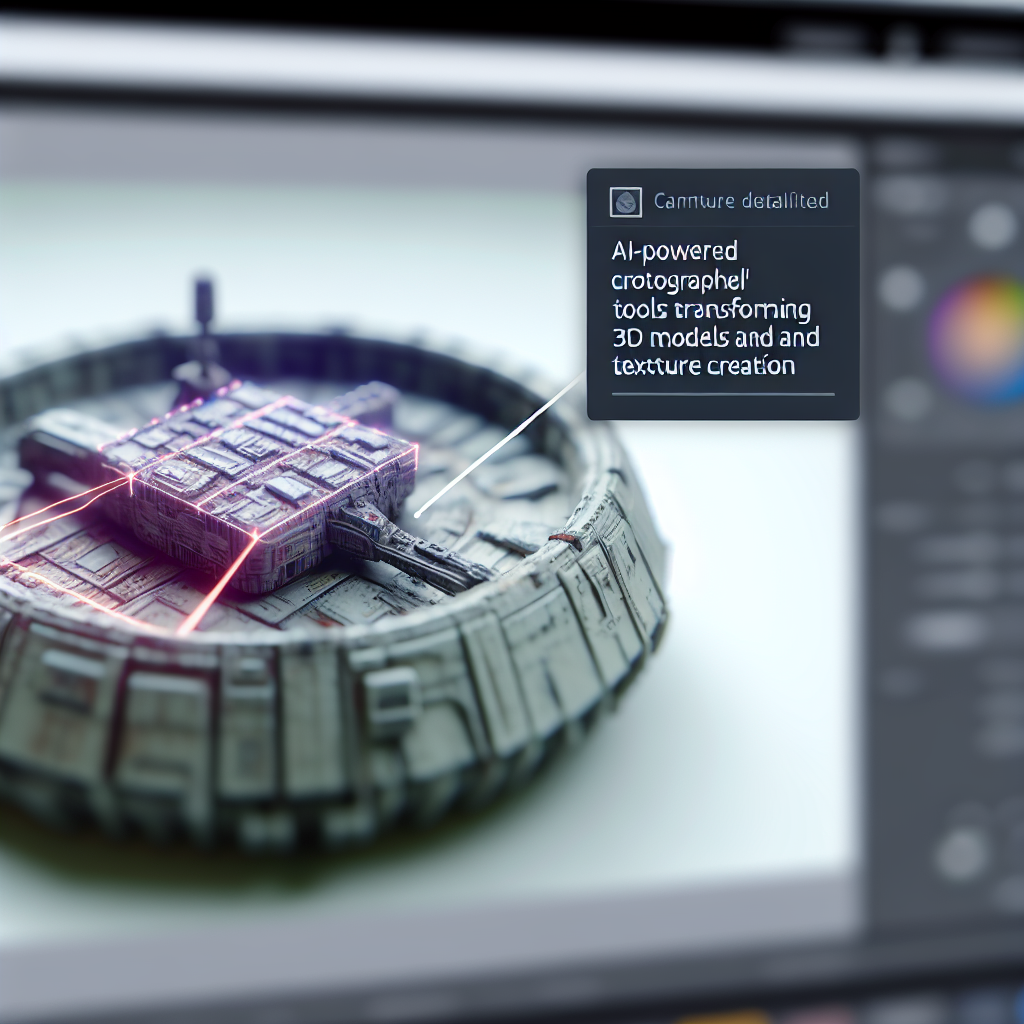
Artificial Intelligence-driven software is revolutionizing the creative industry by enabling the rapid and realistic generation of textures and 3D models. These cutting-edge tools enhance workflow efficiency, reduce reliance on manual labor, and open new opportunities for designers, game developers, and artists. In this article, we will explore how AI is transforming digital asset creation and the benefits it offers.
The Power of AI in Generating High-Quality Textures and 3D Models
AI-driven software leverages deep learning algorithms, such as generative adversarial networks (GANs) and convolutional neural networks (CNNs), to produce highly detailed and realistic textures and 3D assets. Traditional manual creation requires extensive artistic skill and significant time investment, but AI automates much of this process, ensuring consistent quality and allowing artists to focus on higher-level creative decisions.
These tools can analyze vast datasets of images and textures to learn complex patterns, color schemes, and surface details, then generate new assets that seamlessly blend into existing environments. For example, AI can produce photorealistic terrain textures for video games or detailed fabric surfaces for 3D characters, elevating visual fidelity without the need for exhaustive manual effort.
Advantages of AI-Generated Textures and Models
- Speed and Efficiency: AI algorithms can create textures and models in a fraction of the time it would take manually, accelerating project timelines significantly.
- Cost Reduction: Automating parts of the design process reduces labor costs and makes high-quality assets more accessible to small studios and independent artists.
- Consistency and Customization: AI ensures uniformity across assets, which is crucial for large-scale projects, and can easily generate variations to suit different design needs.
- Creative Exploration: Artists can leverage AI to explore a broader range of styles and ideas, pushing creative boundaries beyond conventional techniques.
Moreover, AI-generated textures and models can serve as invaluable starting points or inspiration, which artists can further refine and customize, ensuring a perfect balance between automation and artistic input.
Conclusion
AI-driven software is reshaping how high-quality textures and 3D models are created by providing faster, more cost-effective, and versatile solutions. As technology advances, artists and developers will increasingly harness AI to streamline workflows and achieve unprecedented levels of realism. Embracing these tools will be essential for staying competitive in today’s dynamic digital landscape.