
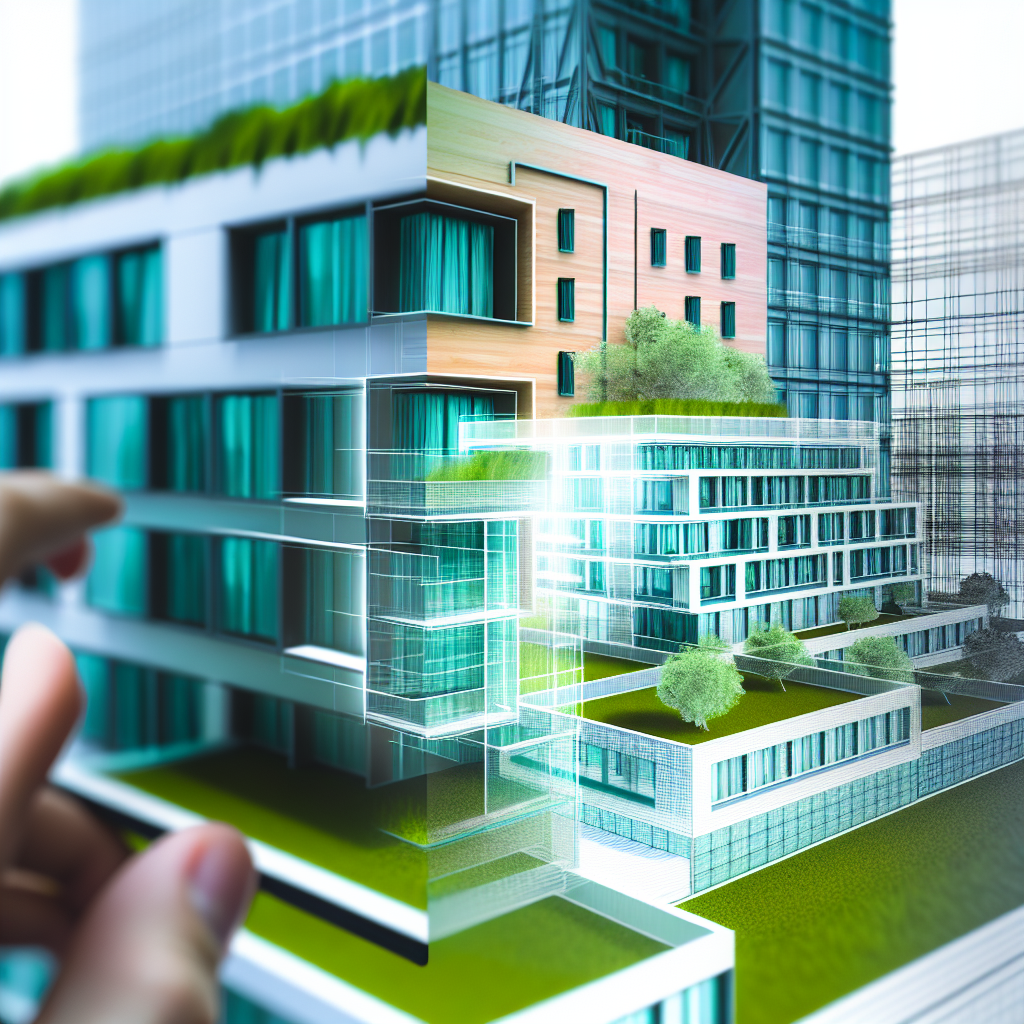
In today’s construction and design industries, integrating sustainable practices with advanced technology is more critical than ever. This article explores the role of Green Building XML (gbXML) in promoting sustainable design, highlights how Autodesk Revit Systems Analysis enhances building performance assessments, and discusses additional tools that are transforming eco-friendly building practices.
Green Building XML (gbXML): The Foundation of Sustainable Design Data Exchange
Green Building XML (gbXML) is an open schema designed to facilitate the seamless exchange of building data focused on energy analysis and environmental performance. Configured in an XML format, gbXML serves as a universal language between various Building Information Modeling (BIM) tools and energy simulation software, enabling architects and engineers to evaluate and optimize building designs for energy efficiency early in the development process.
Utilizing gbXML in the design process allows stakeholders to perform detailed thermal analysis, daylighting studies, and HVAC system evaluations. For example, once a building’s model is created in Revit, exporting it as a gbXML file enables energy consultants to analyze energy loads, heating and cooling requirements, and indoor environmental quality. This collaborative flow accelerates sustainable decision-making, reduces errors, and supports certifications like LEED.
Moreover, advances in gbXML integrations with tools such as Trane TRACE, eQUEST, and EnergyPlus streamline sustainable design workflows. Improved interoperability not only saves time but also enhances accuracy, ensuring that building performance targets are met without compromising aesthetic or functional aspects.
Autodesk Revit Systems Analysis: Boosting Building Performance with BIM
Autodesk Revit is a cornerstone software in the BIM ecosystem, enabling comprehensive systems analysis directly within the design platform. Its capabilities extend beyond 3D modeling, allowing architects and engineers to simulate and analyze building systems in real time, promoting more sustainable and energy-efficient designs.
By utilizing Revit’s Systems Analysis tools, professionals can perform:
- Energy modeling to visualize consumption patterns and identify efficiencies
- HVAC analysis to optimize air flow and temperature controls for optimal occupant comfort and minimal energy waste
- Lighting simulations to maximize daylight penetration and reduce reliance on artificial lighting
This integrated approach helps identify potential issues early, reducing costly revisions during construction and minimizing environmental impact. Revit’s compatibility with gbXML further enhances this process, allowing for detailed energy simulation by exporting models to compatible analysis tools. As a result, design teams can iterate rapidly, balancing sustainability goals with design intent.
Beyond system analysis, Autodesk Revit supports collaboration among disciplines, ensuring that energy-efficient systems are integrated seamlessly into the building model, and facilitates compliance with green building standards and certifications.
Conclusion
Advancements in sustainable building practices are increasingly reliant on integrated digital tools like gbXML and Autodesk Revit’s Systems Analysis. These technologies enable precise data exchange, real-time performance simulation, and collaborative workflows that drive energy efficiency and environmental responsibility. Embracing these innovations allows industry professionals to design smarter, greener buildings that meet modern sustainability standards and future-proof their projects for decades to come.